Quick answer: In NSW, bathroom waterproofing has to meet the National Construction Code (NCC), which points to the Housing Provisions and the Australian Standard AS 3740 for wet areas. Shower walls must be waterproofed to a height of 1800 mm, and if you have a floor waste, the floor has to fall towards it. Waterproofing is licensed trade work in NSW, so use a licensed builder or waterproofer and make sure the membrane is checked before any tiles go on.
Key takeaways
- Waterproofing sits under the tiles, so it is the one part of a bathroom you cannot easily fix later.
- The NCC sets the minimum standard for wet areas in houses, including shower walls to 1800 mm.
- In NSW you need a contractor licence for residential building or trade work, including waterproofing, valued at more than $5,000.
- In a strata unit, a bathroom renovation is a major renovation and needs owners corporation approval first.
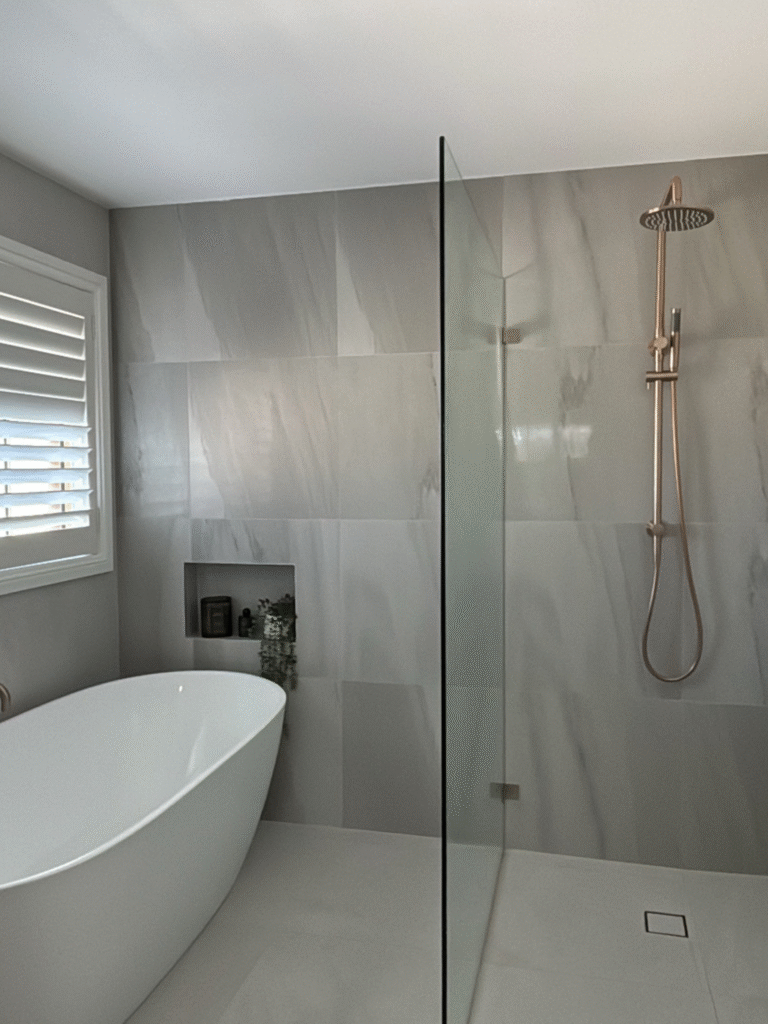
Why bathroom waterproofing matters
Tiles and grout are not waterproof on their own. Water gets through grout lines and tiny cracks, so the real protection is the waterproofing membrane underneath. When it is missing, too thin or damaged, water soaks into the wall frame, the floor and sometimes the room next door or the ceiling below.
The trouble is that a failed membrane can take a while to show. By the time you notice a musty smell or lifting tiles, the fix usually means pulling the bathroom apart. That is why we treat waterproofing as the most important step in any bathroom renovation in Sydney, even though you never see it once the job is finished.
What the rules say: NCC, Housing Provisions and AS 3740
For houses, the waterproofing rules are in the NCC, in the ABCB Housing Provisions Part 10.2 (wet area waterproofing). The NCC navigator guide to waterproofing houses sums up the main points:
- Two ways to comply. Builders can follow Part 10.2 of the Housing Provisions in full, or use parts of it together with AS 3740:2021, the Australian Standard for waterproofing domestic wet areas.
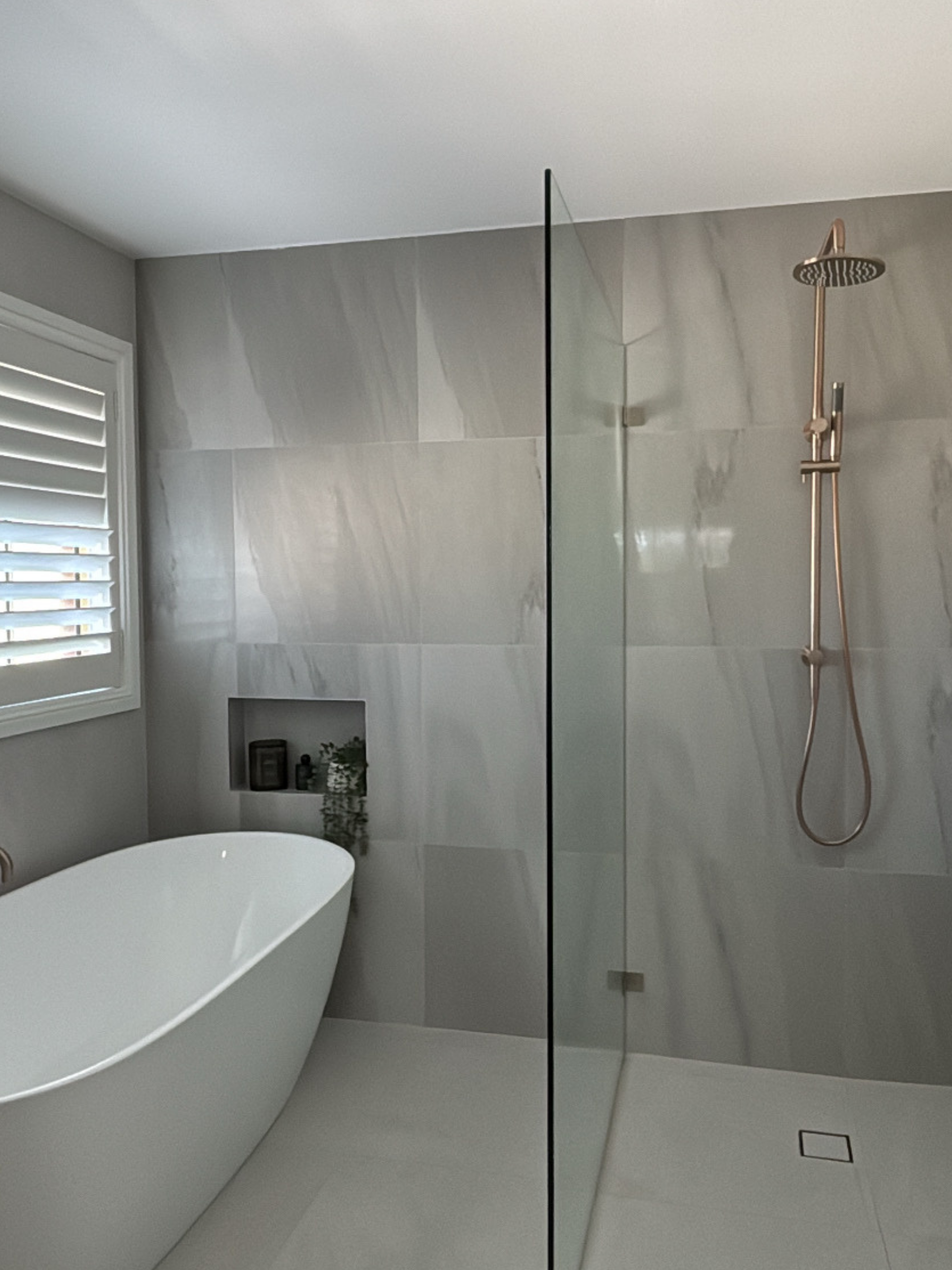
- Shower walls to 1800 mm. The walls of the shower area must be waterproofed to a height of 1800 mm.
- Falls to the waste. The NCC does not force you to install a floor waste, but if you do, the floor must be graded towards it.
Apartments are covered by a different part of the NCC, and some extra NSW rules for building practitioners can apply to work in apartment buildings. Your builder should confirm which rules apply to your building before the job is priced.
Who can do waterproofing in NSW?
NSW treats waterproofing as trade work. According to NSW Government guidance on waterproofing work, you need a contractor licence for any residential building or trade work, including waterproofing, valued at more than $5,000 in labour and materials (including GST).
Plumbing and electrical work are specialist work, and NSW requires a licence for these regardless of cost. Before you sign anything, check your contractor’s licence on the NSW Government licence check. It shows the licence categories and expiry date, so you can see the person is licensed for the work they are quoting.
How waterproofing fits into a bathroom renovation
Every bathroom is a little different, but the waterproofing stage usually follows this order:
- Strip-out and repairs. Old tiles and fixtures come out and any damaged frame or sheeting is replaced.
- Rough-in. The plumber and electrician run new pipes and wiring before the walls are closed.
- Substrate and falls. Wall sheeting goes up and the floor is prepared so water runs to the waste.
- Membrane. The waterproofer applies the system to the shower, floor and junctions, following the manufacturer’s instructions.
- Curing and checking. The membrane must cure before tiling. This is the moment to check and photograph the work.
- Tiling and fit-off. Only then do tiles, the shower screen and fixtures go in.
Curing time is part of why a bathroom cannot be rushed. Our guide on how long a bathroom renovation takes shows where this step sits in the overall timeline.
Signs your bathroom waterproofing may have failed
- A musty smell that does not go away after cleaning
- Mould on walls, ceilings or skirting boards outside the bathroom
- Drummy, loose or cracked tiles, or grout that keeps crumbling
- Swelling or water stains on the vanity, door frame or nearby flooring
- Stains on the ceiling below an upstairs bathroom or in the unit underneath
If you notice any of these, stop using the shower and have it inspected. Small leaks rarely fix themselves.
Waterproofing in strata units
If you own a unit, check your strata rules before you book trades. The NSW strata renovation rules list changes that require waterproofing, and bathroom renovations, as major renovations. These need a special resolution at a general meeting of the owners corporation. Our guide to strata renovation approval in NSW explains the process step by step.
Waterproofing checklist: questions to ask your builder
| Question | Why it matters |
|---|---|
| Who will do the waterproofing, and what licence do they hold? | You can check the licence and its categories online. |
| Which membrane system will you use? | The product’s instructions set the application and curing steps. |
| Will the membrane be checked before tiling? | Problems are cheap to fix before tiles go on and costly after. |
| Will I get photos and paperwork for the waterproofing? | Useful records if you sell, or if a problem appears later. |
| Is strata or council approval needed? | Units usually need owners corporation approval before work starts. |
For more on choosing a builder, see our questions to ask a builder in Sydney.
Frequently Asked Questions
Does a bathroom need waterproofing in NSW?
Yes. Bathrooms are wet areas, and the NCC requires them to be waterproofed or water resistant. The shower area has the strictest requirements, including waterproofing the shower walls to a height of 1800 mm.
Can I do my own bathroom waterproofing in NSW?
We don’t recommend it. Waterproofing is licensed trade work in NSW for jobs over $5,000, and a mistake under the tiles is expensive to fix. In a unit, the owners corporation will usually want details of the licensed trades doing the work.
What is AS 3740?
AS 3740 is the Australian Standard for waterproofing domestic wet areas. The NCC lets builders use the current version, AS 3740:2021, together with parts of the Housing Provisions, or follow Part 10.2 of the Housing Provisions in full.
Can you waterproof over old tiles?
Some products are sold for this, but a full renovation normally strips the old tiles so the substrate, falls and junctions can be checked and fixed properly. Your builder should explain what the chosen system allows.
Sources
Want your bathroom waterproofed properly the first time?
Acron Projects is a licensed NSW builder (licence 492091C) based in Oatlands. We manage licensed trades, waterproofing and tiling under one roof and give you a fixed-price quote before work starts.